Social dilemma? Confrontation. Facebook is a breeding ground for passive-aggressive remarks, and it's only gotten easier and easier to make yourself more aggressive and more hurtful to others without having to be held truly responsible.
Make a mean status? Who cares, it's just Facebook. Tweet something cruel? Doesn't matter. It's just online.
Thursday, July 12, 2012

Monday, July 9, 2012
And There They Go...
I feel like the title of the book reflects the position we're in, as a society, when it comes to technology. The "whole world" seems to be following along with what's being said and done, as long as it's either moving us forward or keeping us up.
By relying so heavily on the behaviors that "everybody" is engaging in, we're changing our own a little at a time. We're becoming a society that bases all of our actions and reactions on the initiated thoughts and feelings of our laptops.
By relying so heavily on the behaviors that "everybody" is engaging in, we're changing our own a little at a time. We're becoming a society that bases all of our actions and reactions on the initiated thoughts and feelings of our laptops.
Friday, July 6, 2012
Let's Get Critical, Critical!
Technological literacy isn't something that we'll need to define one more time. We know that it's essentially revolving around knowing what you're doing, and knowing why you need to do it.
Critical technological literacy is a different matter entirely. Even the addition of the new word brings us to a new understanding of what it truly means in this context. It has become urgent, even demanded, that we bring this into the mainstream ideas about what is required to be a functional person in our society today.
It goes from being commonly considered unnecessary to be demanded as a life skill.
Critical technological literacy is a different matter entirely. Even the addition of the new word brings us to a new understanding of what it truly means in this context. It has become urgent, even demanded, that we bring this into the mainstream ideas about what is required to be a functional person in our society today.
It goes from being commonly considered unnecessary to be demanded as a life skill.
Wednesday, July 4, 2012
I HATE IRONING AND EVERYTHING RELATED TO IRONING BECAUSE IT IS STUPID.
This fine lady is June Cleaver.

 That's because I fricking hate ironing. In fact, I hate ironing the way that most people hate the BMV.
Michael looks disgruntled as well, but that's neither here nor there. He just likes to make that face.
That's because I fricking hate ironing. In fact, I hate ironing the way that most people hate the BMV.
Michael looks disgruntled as well, but that's neither here nor there. He just likes to make that face.
This is another fine lady who's just too damned excited to be ironing.

This is me. Do you see my face? Do you see how I don't look excited? Do you see how I'm not wearing pearls?

In reality, the reason that I hate ironing is that I'm not good at it. So not good at it, in fact, that I had to look up a YouTube video to help my shit out. It didn't help, but it did bring technology into my daily life, because fifty years ago I'd have just had to beg my elderly neighbors to teach me their ways while they bitched about the Reds that'd just moved in across the street. Anyway, the point is it's blog worthy. Because technology.
The video I watched is included Down There, at the bottom of this post. Since you've already read this far, I'm assuming you can probably see it anyway, which renders this explanation pretty pointless. Oh well.
Tuesday, July 3, 2012
Do You Want Fries with That?
I feel like the ways that you can use technology in businesses are nearly infinite. I'm a Creative Writing major, and essentially all of the writing and publishing process is done on computers in one way or another.
On a broader scale, even the printers and machinery used in the more solid, tangible side of publishing are still technology. Even if we tend to forget.
On a broader scale, even the printers and machinery used in the more solid, tangible side of publishing are still technology. Even if we tend to forget.
Monday, July 2, 2012
That Mustache Was a Thing of Beauty
Facial hair revelations aside, I think it's safe to say that anybody who's currently involved in education knows that the nice men on the YouTube were right.
Whether you're in a teaching position, or that of a student, you know that the idea of all things technological stemming back to a computer and knowing how to print, write a word document, etc. without any real consideration for the idea of "literacy" from a technological perspective. We're taught the bare-boned necessities, without any added bonuses or extensive thought.
Instead of knowing the reasons why things work, or really even the reasons why we do them, we're expected to know the how.
Whether you're in a teaching position, or that of a student, you know that the idea of all things technological stemming back to a computer and knowing how to print, write a word document, etc. without any real consideration for the idea of "literacy" from a technological perspective. We're taught the bare-boned necessities, without any added bonuses or extensive thought.
Instead of knowing the reasons why things work, or really even the reasons why we do them, we're expected to know the how.
Wednesday, June 27, 2012
This Just In, From Dubya Dubya Two.
To get right to the point: Ms. Selfe has defined literacy as "computer skills and the ability to use computers and other technology to improve learning, productivity, and performance."
I'm lucky that definition was found on the first page of chapter one, because by the fifth page I was irritated, and by the eleventh page I had given up entirely.
Monday, June 25, 2012
Epi...Epistayta...Episteemed...Oh Hayl.
After some intense Google searching, I've managed to not only come up with a rough working definition of what "epistemic" means, but also what each of its proposed uses mean. At least, I think I do.
Before I get too wrapped up in my newfound vocabulary, let me just dive in. There are three uses of epistemic rhetoric, which is rhetoric related to knowledge. According to Mr. Brummett, there are three reasons to use it. To save myself the time (and potentially, the embarrassment) of trying to tie them all together in a nice, flowy package, I'm just going to list them. Ready? Go!
1. Methodology
Basically, knowledge-based rhetoric can be used as a brute method to show people the truths in life. While there's plenty of gray-area here, it seems to break down to this: On the part of the listener, the epistemic bits can help them see the bare bones facts in any argument. On the part of the speaker, using epistemic rhetoric can work to their advantage because of the effect it can elicit.
2. Sociology
Numero dos seems to work out most of the gray-area that I mentioned before. Since rhetoric "leads to knowledge of social questions because it creates what there is to know in the social realm," it makes it easy to explain the ability of rhetoric to stand both in the more concrete realm that the first use encompasses, as well as the more hairy topics that are shoved into our sociological stratosphere. Not every issue is going to have an absolute truth, and by using socially founded observations, arguments can still be made effectively using rhetoric epistemically.
3. Ontology
Last but not least, we have what is by far the loftiest of rhetorical goals. I won't lie, I had to see what exactly ontology was, and the definition that I liked was "the branch of metaphysics that deals with the nature of being." The general argument that Brummett was making was that nothing can truly exist without our rhetorical abilities to make it so.
As a final thought, I'd like to remind you, dear reader, that all of these are just my interpretations, and they should never, ever, ever be considered accurate. I've done my level best, but that doesn't come with a guarantee.
Before I get too wrapped up in my newfound vocabulary, let me just dive in. There are three uses of epistemic rhetoric, which is rhetoric related to knowledge. According to Mr. Brummett, there are three reasons to use it. To save myself the time (and potentially, the embarrassment) of trying to tie them all together in a nice, flowy package, I'm just going to list them. Ready? Go!
1. Methodology
Basically, knowledge-based rhetoric can be used as a brute method to show people the truths in life. While there's plenty of gray-area here, it seems to break down to this: On the part of the listener, the epistemic bits can help them see the bare bones facts in any argument. On the part of the speaker, using epistemic rhetoric can work to their advantage because of the effect it can elicit.
2. Sociology
Numero dos seems to work out most of the gray-area that I mentioned before. Since rhetoric "leads to knowledge of social questions because it creates what there is to know in the social realm," it makes it easy to explain the ability of rhetoric to stand both in the more concrete realm that the first use encompasses, as well as the more hairy topics that are shoved into our sociological stratosphere. Not every issue is going to have an absolute truth, and by using socially founded observations, arguments can still be made effectively using rhetoric epistemically.
3. Ontology
Last but not least, we have what is by far the loftiest of rhetorical goals. I won't lie, I had to see what exactly ontology was, and the definition that I liked was "the branch of metaphysics that deals with the nature of being." The general argument that Brummett was making was that nothing can truly exist without our rhetorical abilities to make it so.
As a final thought, I'd like to remind you, dear reader, that all of these are just my interpretations, and they should never, ever, ever be considered accurate. I've done my level best, but that doesn't come with a guarantee.
Wednesday, June 20, 2012
Use Your Words!
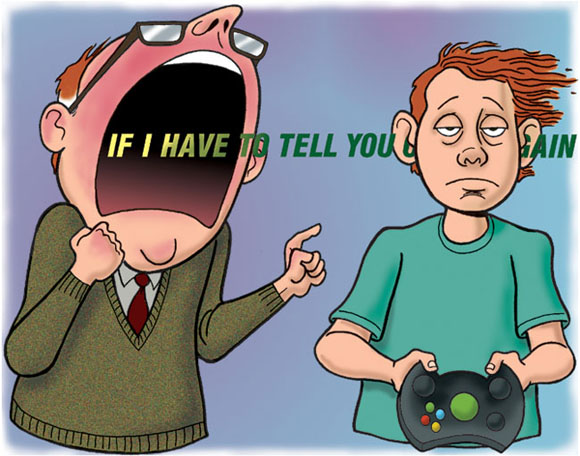
We are bombarded on a constant and overwhelming basis with information. We hear radio ads in our cars every morning. On that same commute, we pass billboards. When we read magazines between classes we see more advertising, and when we check our Facebook during our boring classes (You know. The ones before and after ENG 213.) we see tiny squares of text with bizarrely relevant photos that are supposed to be tailored to our tastes.
Each of these things is demanding that we pay attention to it. Each of the aforementioned things is an informational medium. We deal with them on a daily basis, and I'm not too terribly certain that anybody loves any of them too dearly. Except for those of you who're choosing to do it as a profession, in which case, more power to you. But anyway, the point is, we know them. We're familiar. We get it.
We're so familiar, as it turns out, that we tend to forget about the original advertising medium:
The spoken word.
Each of these things is demanding that we pay attention to it. Each of the aforementioned things is an informational medium. We deal with them on a daily basis, and I'm not too terribly certain that anybody loves any of them too dearly. Except for those of you who're choosing to do it as a profession, in which case, more power to you. But anyway, the point is, we know them. We're familiar. We get it.
We're so familiar, as it turns out, that we tend to forget about the original advertising medium:
 |
| http://www.greenberg-art.com/.Illustrations/.Humorous/qq1sgYellingAtKids.jpg |
Before there were delicately created ads popping up in your internet window, talking babies selling you on which brokerage firm is the most effective, and billboards the size of two-story homes along the sides of all the roads, people had to sell things and convince people organically.
Specifically used words were all that they had. Even today, while it's generally done without any sort of consciously made decision, we use the same techniques. No matter who it is that we're holding a conversation with, we're always trying to convince them of something.
Whether it's a future employer
("Look how well I'm handling this interview. I am clearly the best possible option to dish out your ice cream cones."),
a new professor
("It's not my fault I know the answers to all your questions. I'm just so friggin' capable and prepared and stuff."),
or a peer
("I'm just as nifty and collegiate as you are, dammit!"),
the way that we present ourselves is just a toned down way of advertising.
It may not need a fancy, overpaid designer, but the concept is the same.
Language isn't just a medium of advertising. It's the original, and the founder of all those that came after it.
Tuesday, June 19, 2012
Two Men Don't Make an Argument
Quite frankly, I think they're both wrong. Any time you decide that you're opinion swings to the extreme of any spectrum, it seems almost inevitable that you're really just going to make yourself look silly. And while one of our authors (Carr) thinks that excessive internet usage is going to cause this:
and the other (Shirky) seems to think that mastering the detailed facets of the World Wide Web is the precursor to this:
the reality is this:

 |
| http://www.jonathanrosenbaum.com/wp-content/uploads/2011/08/the-day-after-tomorrow.jpg |
 |
| http://emergingyouth.files.wordpress.com/2011/04/led20zeppelin20stairway20to20heaven.jpg |

Young adults sit around with juice boxes and kittens and look at pictures of...well...kittens.
Both authors are partially correct. The increased use of the internet in our world today has fundamentally altered the ways in which we operate. However, neither of them had it quite right. While Carr took the negative approach and decided that (about halfway down the eleventybillion lines of text) it is in the "economic interest [of companies] to drive us to distraction." Based on this, he has decided that since we are now distracted, we are useless. Or at least, we will be.
On the other hand, Shirky has decided that since the newly formed Intertube resources have given today's youth (doomed though we may be, in Carr's world) the outlet that we need to become the truly upstanding citizens it'll take to save humanity from itself. While each new wave of technology in the past has done nothing short of exacerbate the dirty little nooks of the world it came into (Scat porn, anybody?) this wave will be different. This wave will give us freedom. It'll give us a new life. It'll change everything.
Except it won't. They're wrong. The incoming information we deal with on the internet is, in fact, different from anything that's happened before, it's not going to turn us into a generation of concentration-deficient robots. Also, the accessibility of blogging sites isn't going to form a massive influx of Hemingways and Prousts.
Except it won't. They're wrong. The incoming information we deal with on the internet is, in fact, different from anything that's happened before, it's not going to turn us into a generation of concentration-deficient robots. Also, the accessibility of blogging sites isn't going to form a massive influx of Hemingways and Prousts.
Instead, it's going to serve multiple moderate purposes. It will make it easier to write for those of us who wish to do so. It will make it easy to access information quickly, in snippets that are easily digested. And finally, it will become a part of our lives that is so innate and reflexive that we will have adapted to these things, and they'll fall into our patterns of behavior where we need them.
Monday, June 18, 2012
The Basics of Digital Literacy...I Think.
Digital literacy is, simply put, the capability to use basic technological tools in day-to-day life.
This plays into the ability to communicate thoughts and ideas, as well as pop culture and news information effectively to as many people as possible.
This plays into the ability to communicate thoughts and ideas, as well as pop culture and news information effectively to as many people as possible.
Subscribe to:
Comments (Atom)